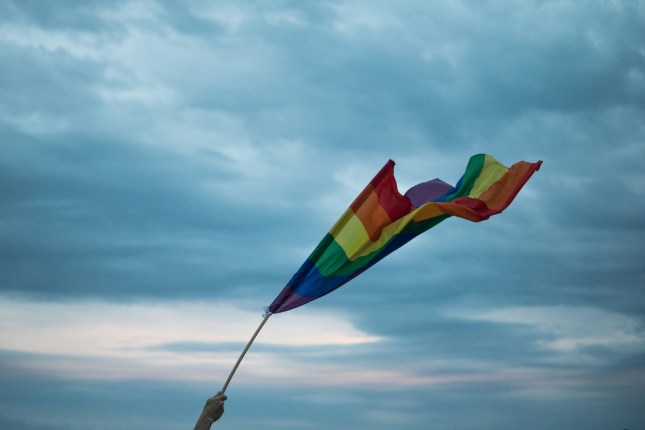
In the aftermath of India’s 2023 Supreme Court ruling against same-sex marriage, LGBTQ+ activists face unique challenges. With limited legal options and a potential NDA win in 2024, this article proposes two strategic approaches for activists to consider. First, engaging with opposition parties can enhance LGBTQ+ representation. Second, collaborating with non-state actors, such as leaders in the media, education, faith, and healthcare institutions, offers the potential for greater societal acceptance.
LGBTQ+ rights activists were hopeful that 2023 would be the year that India legalized same-sex marriage. Five years ago in 2018, five judges of the Supreme Court unanimously struck down parts of Section 377 of the 1850 Indian Penal Code (“IPC”) in Navtej Singh Johar v. Union of India (“Navtej”). This law criminalized consensual same-sex activity between adults and lumped it together with bestiality; it carried a maximum penalty of life imprisonment.
It should be noted that before the Navtej judgment was handed down, both the Indian Parliament and the Indian Supreme Court had been hesitant to change the law. For example, on 18 December 2015, Lok Sabha (also called the “Lower House” or the “House of the People”) member Shashi Tharoor of the Indian National Congress introduced a private member’s bill to amend the text of Section 377 in the IPC to decriminalize consensual same-sex relations. The bill was defeated in the first reading by 71 to only 24, with one abstention.
Additionally, in December 2013 a two-judge bench of the Supreme Court ruled in Naz Foundation v. Govt. of NCT of Delhi (“Koushal”) that Section 377 of the IPC was constitutional and did not violate the “so-called rights of LGBT persons”.
It should therefore come as no surprise that the Supreme Court verdict in Navtej was lauded by LGBTQ+ activists. Not only did it overturn the same court’s previous judgment in Koushal, it also paved the way for a litigation strategy to advocate for same-sex marriage.
Unfortunately, the Supreme Court judgment in the 2023 marriage equality case did not favour the LGBTQ+ community. This case involved a batch of petitions from members of the LGBTQ+ community seeking recognition of their right to marry under India’s secular marriage law, the Special Marriage Act of 1954. Notably, the BJP government vociferously opposed these petitions, arguing that it had no ‘legitimate state interest’ in expanding marriage rights to same-sex couples. After a public hearing, a bench comprised of five Supreme Court justices ultimately held that the constitution did not confer a right to marry, and the majority (three out of the five justices) further asserted that it was up to Parliament to decide whether or not to grant marriage rights to LGBTQ+ couples. In other words, the majority held that granting marriage rights to same-sex couples was beyond the Court’s remit.
As we enter 2024, we cannot help but acknowledge that this is also an election year. India will elect more than 500 lawmakers to the Lok Sabha – the house tasked with tabling and passing bills – and, at the moment, there are no openly queer lawmakers in the Lok Sabha. The political party or coalition that wins most seats in the Lok Sabha after the elections will be invited by the President of India to form the next government. If polls are any indicator of success, it appears that the National Democratic Alliance (NDA), led by the right-wing Bharatiya Janata Party (BJP) is set to win a comfortable majority, and Narendra Modi will secure his third term as prime minister. The BJP-led government vehemently opposed marriage equality in the Supreme Court last year.
This leaves advocates for LGBTQ+ rights in a conundrum. If the top court has ruled out any possibility of legalizing same-sex marriage, and if a government hostile to the issue will most likely rule the legislature, what should the community do?
Here are two avenues that they can consider.
Working with the opposition
Even though opinion polls suggest that the NDA is poised to win the general election, the main opposition bloc, the Indian National Developmental Inclusive Alliance (INDIA), is still likely to secure a considerable number of seats across the country. For example, the ABP-CVoter Survey found that the INDIA bloc was expected to win 132 seats in South India (including the states of Telangana, Karnataka, Kerala, and Tamil Nadu). Similarly, a joint survey by Times Now and ETG Research predicted an INDIA win in Punjab, a northern state. According to the Times Now-ETG poll, the overall Hindi-speaking region is expected to return an 80% success rate for the NDA, but that also leaves 20% for the opposition to win — and it is this window that the LGBTQ+ community must capitalize on.
Some opposition parties have embraced members from the LGBTQ+ community over the years. For example, Bobby Kinnar who became the first transgender councilor from the Aam Aadmi Party (AAP) in 2022, and Apsara Reddy, who was the first transgender woman to be appointed general secretary of All India Mahila Congress (AIMC) in 2019. However, instances like these are far too few, and representation is limited to transgender persons. For a truly inclusive and equitable future, a broader spectrum of LGBTQ+ voices and perspectives needs to be actively represented in opposition politics. LGBTQ+ activists should directly engage with opposition leaders to ensure this happens, fostering a stronger alliance and amplifying diverse voices within the opposition.
Moreover, given that the NDA opposes same-sex marriage, the opposition parties now have an opportunity to advocate for it as a key differentiating factor. This is an issue the opposition refrained from commenting on at the time of the Supreme Court hearings on marriage equality, but now they have a chance to address it as the Court has clarified that the matter now lies with elected officials at the state and union level. In line with the opposition stance of protecting democracy and the sanctity of the constitution, they can showcase their commitment to inclusion by championing this cause. This could be a powerful way to demonstrate how true inclusivity strengthens society and empowers all its members. By leading by example and advocating for the full spectrum of LGBTQ+ rights, the opposition can not only differentiate themselves from the NDA but also build a more equitable and just future for all Indians.

Working with non-state actors
Beyond the political sphere, a vast landscape of people, processes, and institutions – including media conglomerates, educational institutions, and healthcare facilities – stand to gain from enhanced awareness and understanding of the LGBTQ+ community and its experiences.
Over the years, the media has played an important role in disseminating court judgments on LGBTQ+ rights and, of late, has also reported on instances of violence faced by LGBTQ+ people. However, the media could do a much better job of representing LGBTQ+ people more fairly and ensuring that more diverse stories with nuanced angles are highlighted that depict other dimensions of the LGBTQ+ experience. These would include stories that explore LGBTQ+ friendships, relationships that LGBTQ+ people share with God, and deeper conversations about allyship.
There is also a glaring policy gap concerning sex and sexuality education in India. Many misconceptions about the LGBTQ+ community could be dispelled with the presence of a robust, scientifically accurate, and age-appropriate sex education curriculum that authentically addresses LGBTQ+ topics. Unfortunately, this is not the current state of affairs and the LGBTQ+ community doesn’t appear to be making significant progress in advocating for this change.
Engaging with leaders in other sectors like popular media, businesses, faith communities, and healthcare institutions can also unlock significant opportunities for progress. By clearly articulating the value of LGBTQ+ rights and the principles of diversity, equality, and inclusion, LGBTQ+ advocates can empower individuals in these spheres to become champions of inclusive practices within their own realms of influence. This collaborative approach has the potential to create a positive ripple effect, fostering a more welcoming and equitable society for all.
The Long-Term Strategy
While legalizing same-sex marriage in India under another conservative NDA administration appears unlikely, the situation in Greece reveals an alternative path to progress. In Greece, evolving public attitudes and incremental change have led the centre-right government to work towards legalizing same-sex marriage and extending adoption rights to same-sex couples. The Greek case exemplifies how societal acceptance can pave the way for legal advancements, even amidst strong religious opposition.
Greece’s Orthodox Church has long been a vocal opponent of same-sex marriage, declaring it “morally unacceptable” and detrimental to children. Yet public opinion has undergone a remarkable transformation. In 2023, nearly half of Greeks supported legalizing same-sex marriage – a significant shift in opinion from previous years. This evolving sentiment has led the current Greek Prime Minister, Kyriakos Mitsotakis, to propose a law to legalize same-sex marriage and expand adoption rights to same-sex couples.
Like Greece, India faces religious opposition to LGBTQ+ rights. However, the Greek case reveals that by strategically engaging with social movements and community outreach programs, India too can foster greater understanding and acceptance of the LGBTQ+ community.
While no two countries’ paths are identical, prioritizing social acceptance and shifting attitudes holds immense potential. LGBTQ+ activists in India, through strategic efforts, can pave the way for a future where India’s legal framework will one day grant equal rights and protections to all irrespective of sexual orientation and gender identity. For this, working with the opposition and non-state actors is key, and the work must begin immediately.
Kanav N Sahgal
Leave a Reply