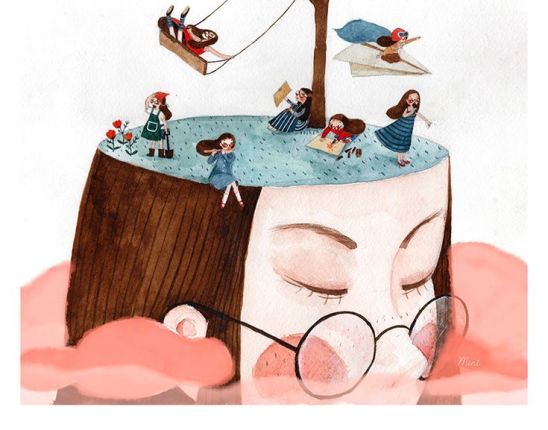
The question of whether and how we can regulate our emotions is long-standing but has become newly debated and contested. Three views of emotion regulation are introduced and compared: a research-based model that emphasizes the role of cognition, a mindfulness model that encourages acceptance of emotions, and a contemporary psychoanalytic model that is based upon the construct of mentalization, the capacity to imagine the mental states of the self and others, which affirms the value of processing emotions and links emotions to the development of the self, with limits because of the unconscious.
Everywhere from academic research to popular culture, emotions seem to be on people’s minds. A large portion of this interest has centered on our ability to utilize and control emotions, a subject that goes back to the ancient Greeks. The growing literature on emotion regulation adheres to the Aristotelian way of thinking about emotions: that we can work to educate our emotions to occur in the right way to the right person at the right time (1). In other words, that we can train our emotions so they occur in an optimal form—let’s say that you originally perceived yourself as 7/10 in anger but realize that 4/10 seems more fitting: you feel slightly more than annoyed but certainly less than enraged. This is countered by the Stoic way of thinking, which stresses that emotions overpower us and lead us astray if we act under their influence (2). From this perspective, it is dangerous to act while under the influence of emotions, especially when they first occur as our thinking is too clouded to be discriminating. The difference between the Aristotelian and Stoic perspectives centers on our ability to influence and train our emotions.
While it might well seem that the Aristotelian and Stoic views are diametrically opposed, it is possible to imagine how they might be reconciled. Indeed, Spinoza argued that the Stoics are right that we should not act upon emotions when they are at the high point of being aroused, but the Aristotelians are right that making the effort to understand our emotions is critical for human well-being (3). An example might be that you strive to choose not to tell a friend off after being upset at them for not returning your calls because you know that growing up, people in your family tended to get too angry, too easily. Therefore, you realize that questioning your anger is probably appropriate — waiting to see if your friend acknowledges that he has been slow to respond, and striving to hold your anger in a tentative way, awaiting further evidence. If it turns out that your friend’s child was sick, you might feel less angry; if he laughs at you for being over-sensitive, you might become angrier.
Jumping to the first scientific efforts to understand emotions in the 19th century, Darwin introduced a revolutionary, more positive evaluation: that they have become hard-wired, a product of evolution that are necessary for our survival (4). According to the Darwinian perspective, emotions occur briefly and are readily identifiable through facial expressions. Darwin’s thinking has been developed into a line of empirical research in the so-called “basic emotions theory,” which proposes that emotions such as fear, anger, sadness, surprise, and joy occur naturally, with additional emotions added determined by display rules, mediated by social and cultural values. It is during the second half of the first year of life that infants start to display some of the basic emotions, which are then abetted by caregivers’ responses. Proponents of the “basic emotions theory” believe that our emotions are universal, even though culture and values can have a powerful impact in altering how they are manifested.
The basic emotions paradigm, developed by psychologist Paul Ekman, has been widely accepted and continues to be regularly taught to students in introductory psychology courses. However, this paradigm has come under increasing criticism. For one thing, the research methodology conducted to support its universality is problematic, as it is based upon showing pictures with different facial expressions that depict the range of basic emotions and then asking subject to choose from a pre-selected group of words (5). That does not tell us which emotions a culture would value most highly; nor can we discern what particular emotions mean in that culture. The impact of culture arguably runs deeper than just establishing display rules for basic emotions. For example, some cultures welcome sadness, while other cultures see it as a disruption of social life. Basic emotions theory has also been criticized for not making room for emotion words that exist in one culture but not others. The most famous example is the Japanese word “amae,” which denotes the pleasure one takes at being dependent upon others. For cultures that are organized around individuality, there is less of a need to perceive and recognize an emotion like “amae”.
Furthermore, efforts to link basic emotions to physiology has not proven to be very successful. Lisa Feldman Barrett, a well-known researcher on the topic of emotions, offers a review of neuroscientific efforts to explore whether emotions have “fingerprints,” that are characteristic manifestations in the autonomic nervous system that help us to identify them as universal, which basic emotions advocates have claimed (6). She doubts that basic emotions are universal, citing a meta-analysis of 202 studies, encompassing 20,000 subjects, which found no consistent and specific emotional footprints in the autonomic nervous system (7). Even though Barret does acknowledge that happiness, typically discernable through smiling faces and laughing voices, is as close as we can come to a universal emotional response (6), she hesitates to concur that emotions are universal, proposing instead that emotions are constructed as much as they are discovered as part of our biology. Socio-cultural values are not simply added to the biological realm; there is a deeper, bidirectional influence of both on each other.
With the backdrop of philosophy and the advent of the scientific study of emotion, we are now better equipped to look at three contemporary perspectives on how we manage our emotions. The first perspective has emerged from psychology; it is a stimulus-response model rooted in empirical research and has garnered attention across all fields of psychology. This view follows emotions through a process, where the most important component is cognitive reappraisal. Cognitive reappraisal means that cognition is used to reconsider the experienced emotion and is regarded as the optimal strategy to modulate emotions successfully. A specific and repeated finding across this research has been that cognitive reappraisal is more effective than striving to suppress emotions (8). Cognitive reappraisal allows us to sharpen our emotion to fit the circumstance, whereas suppression implies that we attempt to ignore emotions (and thus fail to utilize or learn from them). In affirming the impact of cognition, this perspective on emotion regulation diminishes the power of emotions themselves. This perspective does not acknowledge the elusiveness of our emotions—that cognition is not always successful in clarifying or subduing emotion. This perspective also does not address where the motivation to activate cognition comes from—who or what is the source of such agency?

A recent critique has been made too, that perhaps we should not assume there is a single strategy that is best at regulating emotions, and that it might be preferable to value flexibility and utilizing different strategies in different circumstances (9). Moreover, cross-cultural research suggests that in East Asian cultures, suppression is a good choice because it affirms social harmony and ought not be construed as a way to avoid emotions (10). Cultures that are organized around collectivism are more likely to value suppression and be wary of the free expression of emotions. Therefore, research on emotion regulation needs to be cautious about making assumptions that, in truth, are culturally biased.
The second perspective on emotion regulation has emerged from mindfulness. Here the aim is to experience emotions with some distance and to accept them, rather than try to alter them (11). There is an emphasis on experiencing the emotions without reacting to them. To some extent, this challenges the Stoic trepidation about emotions and seems to align with Spinoza’s mixed view. Mindfulness approaches vary, however, and some stress the importance of practice; thus, the beginner cannot have the same ability as devotees who have invested years in working to find the right relation to their emotions. In endorsing acceptance, it is fair to wonder if the mindfulness perspective might justify a kind of passivity about our emotions. It seems unclear what it would look like to alter emotions, whether to limit or augment them, under this model. There is also a fundamental ambiguity about whether a mindfulness approach leads someone in the direction of knowing the self or encourages someone to overcome and aspire to leave the self behind. The closer mindfulness is its sources in contemplative traditions, the more that it will aim to transcend the limits of the self as an individual in favor of the identity of belonging to something larger.
The third perspective on emotion regulation derives from psychoanalysis, and views emotion regulation as both desirable but not entirely within our capacity. This establishes it as different from the first two perspectives. Emotions have a complicated role in psychoanalytic theory, and Freud never devoted sustained attention to emotions. The reason had something to do with his belief that drives provided the fundament source of human motivation (12). Psychoanalysis comes close to the so-called “dimensions” view of emotions—that is, underlying basic emotions are less determinate valences of experience, like pain and pleasure, that are even more basic than basic emotions. In his later writing, Freud described what he termed “signal affects,” an effort to describe a creative role for emotions as contributing to meaning making. Of course, emotions have always been a part of clinical work, especially fathoming how some emotions can be unconscious.
The contemporary psychoanalytic way of thinking about emotion regulation emerged from work on addictions, where patients were seen as struggling to be able to tolerate emotions, or in the lingo of the time, to engage in “affect handling” and “affect taming” (13). The idea was that people who had addiction problems used drugs as an external way of dealing with emotions, rather than being able to handle or tame them internally. The ego psychology school developed an interest in helping patients to cultivate their emotions to adapt to society. At the other end of the spectrum, Lacanians celebrated the philosophical side of psychoanalysis, claiming that self-knowledge was illusory, and that the crucial contribution of psychoanalysis was to reject the potential for integrating our internal lives and arriving at self-knowledge. Lacan saw it as Freud’s most important realization that we cannot attain the self-knowledge that philosophers of the past touted. (Like Freud, Lacan never focused attention on the subject of emotions).
A spur to grappling with emotions resulted from the focus on infant development that occurred in psychoanalysis in the postwar period. The early attachment relationship is governed by emotions, and caregivers play a crucial role in making the infant aware of emotions, and the capacity to exercise some control over them. Emotions help to secure the bond, but they also serve to forge a sense of self within the infant. Our early cognitive abilities serve to reinforce the development of the sense of self.
Emotion and cognition are linked in mentalization, where the caregiver’s investment in understanding the infant’s mind leads the child to be aware of and explore his own mind, and the minds of others. We mentalize if someone else first mentalizes about us (14). The capacity to mentalize has garnered attention both within and outside of psychoanalysis. Many kinds of psychopathology, especially personality disorders, have been linked to poor mentalizing.
Across all forms of psychotherapy, the work includes an effort to help patients to become better mentalizers, and it involves the therapist mentalizing about the patient, and the patient responding to this, and mentalizing him/herself. Mentalization has been developed as an evidenced-based therapy (MBT), originally for borderline personality disorder, but expanded to include a number of other kinds of psychopathology (15). The most intriguing finding from this research is that MBT helped patients to continue to improve after treatment. This is a crucial finding: successful treatment is defined, not only by the abatement of symptoms, but also by gaining the capacity to remain on the path of salutogenesis, that is, of mental and physical well-being (16).
My research over the last ten years has focused on establishing a closer link between emotion regulation and mentalization, creating a new measure of emotion regulation that incorporates past personal history in conceptualizing the way people manage their emotions (17). For example, how you become angry is likely to be drastically different, depending on whether you grew up in a family where anger was not allowed versus growing up in a family where only one person was allowed to become angry or everyone got angry with the least provocation.
The measure created by my research lab, the Mentalized Affectivity Scale (MAS), robustly distinguishes among identifying, processing, and expressing emotions (18). Processing emotions, we found, is most challenging for people who have a diagnosis of any kind. Whereas identifying and expressing emotions are straightforward, it is less clear what happens when processing emotions. Processing emotions captures how regulation can enable us to reframe emotional experience. Processing differs from the strategy of cognitive reappraisal in that emotion and cognition are brought together. I like to think of this in terms of “modulation,” as in the word derived from music where sounds are blended, as opposed to imagining cognition prevailing over the emotion. The crucial point is that in processing emotions the felt, experiential aspect of emotions is preserved, and not subsumed under cognition.
We can contrast the prominent role for the self in the mentalizing view to the absence of attention to the self in the psychological research perspective and the ambivalence in the mindfulness perspective. Processing emotions encourages a comparison between the self that one would like to be with the self that one is, based on one’s emotional responses. This is where processing emotions bears the influence of its psychoanalytic heritage. Processing emotions can narrow the gap, but it is uncertain if we are able to realize our ideal, given that we lack direct access to the unconscious.
Let us firm up the implications here. The mentalizing perspective differs from the psychology research literature in supposing that autobiographical history heavily influences the experience of emotions. The perspectives concur though, that cognition can be useful in making progress in explicating emotion. The perspectives are nonetheless different in the way they construe the relation between cognition and emotion. The mentalizing perspective differs from the mindfulness perspective in encouraging a more critical stance about our emotions. We can shape our emotions to work better for us: processing is a more active process than acceptance. There is some overlap between the mindfulness and mentalizing perspectives in that they both encourage the development of the capacity to distance oneself from emotion, in order to be able to promote reflection. Crucially, the mentalizing perspective is friendlier to self-exploration than the mindfulness perspective. It regards paying attention to and valuing the self as legitimate and even desirable, whereas the mindfulness perspective encourages the choice to free ourselves from dwelling on the self.
The mentalizing perspective seeks to mediate the divide between the Aristotelian hope to educate our emotions and the Stoic realism that emotions can lead us astray, given that we cannot always have access to them. The mentalizing perspective comes closest to Spinoza’s appreciation of how intense emotions can be dangerous to act upon, but that we derive meaning from emotions. Emotions help us to affirm our beliefs and to know ourselves, as far as this is possible for human beings.
Elliot Jurist
References
- Aristotle, “Nicomachean Ethics”, 2019.
- Cicero, “Tuscalans”, 2016.Jurist,
- Spinoza, B., “Ethics”, 2018.
- Darwin, C., “The Expression of Emotions in Man and Animals”, 2009.
- Ekman, P., “Emotions Revealed: Recognizing Faces and Feelings to Improve Communication and Emotional Life”, 2007.
- Barrett, L.F. “How Emotions are Made: The Secret Life of the Brain”, 2018.
- Siegel, E.H., et al. “Emotion fingerprints or emotion populations? A meta-analytic investigation of autonomic features of emotion categories”. Psychological Bulletin, 2018.
- Gross, J. J., and Thompson, R. A. “Emotion regulation: conceptual foundations” in Handbook of Emotion Regulation, 2007.
- Kobylińska D. and Kusev P. “Flexible Emotion Regulation: How Situational Demands and Individual Differences Influence the Effectiveness of Regulatory Strategies”. Front. Psychol., 2019.
- Ford, B. and Mauss, I., “Culture and Emotion Regulation”, Curr Opin Psycholog, 2015.
- Erisman, S. M., and Roemer, L., “A preliminary investigation of the effects of experimentally induced mindfulness on emotional responding to film clips”, Emotion, 2010.
- Jurist, E., “Art and Emotion in Psychoanalysis,” International Journal of Psychoanalysis, 2006.
- Krystal, H., “Integration and Self-Healing: Affect, Trauma and Alexithymia”, 1988.
- Fonagy, P., et al. “Affect Regulation, Mentalization, and the Development of the Self”, 2002.
- Bateman, A. and Fonagy, P. “Handbook of Mentalizing in Mental Health Practice”, 2011.
- Bhattacharya S, et al. “Salutogenesis: A bona fide guide towards health preservation”, J Family Med Prim Care. 2020.
- Jurist, E., “Minding Emotions: Cultivating Mentalization in Psychotherapy”, 2018.
- Greenberg D. et al. “Mentalized Affectivity: A New Model and Assessment of Emotion Regulation”, PLOS ONE, 2017
Leave a Reply