
Since time immemorial, people have been using songs to protest injustices and co-ordinate protest movements. Conversations with musicians who have performed protest songs and an examination of the ideas of Plato, Arthur Schopenhauer, Sigmund Freud, Donald Winnicott, Anthony Storr and Ernest Becker on music’s cultural and psychological impact provide insight into why music is a unique and important site of protest. Protest may even be inherent in the act of musical creation.
As preparations were being made for the Iraq War in 2003, I was marching around the parade square of the UK’s Royal Military Academy Sandhurst, accompanied by music from the military band. The music kept us in formation and in lockstep, coordinating our activity and bringing us together as one synchronized unit. At the same time, musicians were composing music to protest the war we were rhythmically marching towards. Years later, I spoke with some of those musicians, to explore what makes music a uniquely important site of protest, at a time when a new generation of artists are protesting new wars.
Anthropologist Raymond Firth claims songs “are not composed simply to be listened to for pleasure. They have work to do” (1). Much of that work has been to coordinate our actions, evidenced by the long history of songs played in work settings, from sea shanties written to the rhythm of the hauling of nets, to folk songs written to the rhythm of the scythe and spinning wheel, and the drumming of armies on the march. It also works to bond us together as a group. This has mostly been through religious music. From Pagan rituals marking the changing of the seasons, to devotional music of Sufism to the recitation of sacred words and phrases in Judaism, Islam, Hinduism, and Buddhism, to the evensong of Christian choirs, music has been used to help us move through life as part of a defined group.
In recent times, as the western world has become more secular, an individual at a concert or in a sports crowd can bond with those around them through the singing of national anthems, their favorite hits or joining chants mocking rival teams and celebrations of amazing performances. There are distant echoes in the terraces of modern stadiums of Greek and Roman amphitheaters and the war cries of barbarian tribes. Part of music’s power is its ability to transmit signals about identity and culture while feeling immediate and natural.
We may have had music before we had language, but there is no recorded music before 1877 and Edison’s phonograph. The oldest extant song is “Hurrian Hymn No.6” composed by the Hurrians around 1400 BC. The oldest composition to have survived in totality is “Seikilos Epitaph” a 100 AD Greek tune. Before these, the history of music is mostly a silent history; all we have are whispered echoes. Our history is that of the written, not the sung, word, but we have the earliest surviving works of literature, including the 4,000-year-old Epic of Gilgamesh and Homer’s Odyssey, because they were passed down as songs. Archeologists have noted that cave paintings often cluster at points of maximum resonance in caves. Next to such paintings, shards of bone flutes have been found suggesting a role in communal ritual or storytelling. Individually, many remember the words of songs more accurately than they remember prose; songs bury them more deeply. As children we learn to speak through song and rhyme.
Collectively, songs are an important repository of cultural memory. Jez Cunningham, bassist in The Levellers – whose 38-year existence as a self-managed, equalitarian- collective could be seen as a protest against an avariciously commercial music industry – told me that the song they are most proud of is “The Battle of the Beanfield,” which documents a clash between New Age travellers and a brutal Wiltshire police force, due to the song’s early role in capturing an important, but somewhat neglected piece of cultural history.
Music can be used effectively to create continuity and stability within a group; but it can also create new patterns of joint experience and be used to question the actions, beliefs and hierarchy of the group. For example, some work songs have protested the injustices or existing hierarchies.
An example is provided by Trey Carlisle from Music in Common, an international non-profit organisation which runs musical projects across religious and ethnic divides. Carlisle claims that music was integral to the US civil rights movement because “during marches like the Selma to Montgomery march…black and white folks and folks of different religions were singing the same songs together during their marches to not only uplift their spirits, but also expressed their collective calls for change”. As society changes, the music changes, from “Yankee Doodle” used by colonial American troops to satirize the British in the Revolutionary War, to the gospel and soul of the civil rights era, to hip hop of the more recent George Floyd protests. But the importance of music to protest movements remains.
Andriy Zholob, guitarist in Ukrainian punk band Beton, told me that on stage they experience a “special brotherhood… in which everyone lives by common principles of fighting for justice.” Zholob tells me with punk “it is not necessary to speak at the level of high philosophy… everything can be explained in the ordinary everyday explicit language of the working class.” The use of colloquial language is common across protest songs. After wearing T-shirts emblazoned with the name Stepan Bandera, the band faced protests themselves. Many Ukrainians see Bandera as a liberator who fought against the Nazis and Russians, whilst others view him as a war criminal connected to massacres of Polish civilians. Beton apologized and called for a “debate about our history and contested memory.” A debate not possible in Putin’s Russia, the aggressor their music is protesting, as the banned protest group Pussy Riot can testify. Zholob expressed hope that Beton’s music would galvanize people into action.
Putin isn’t alone in wanting to ban music. Plato wanted to ban all music save that used in battle to stiffen men’s resolve or used in moderation to persuade God or man in a balanced way. Songs that were sorrowful, plaintiff or associated with indolence and drinking were to be banned. He considered music to be “a more potent instrument than any other” (2).
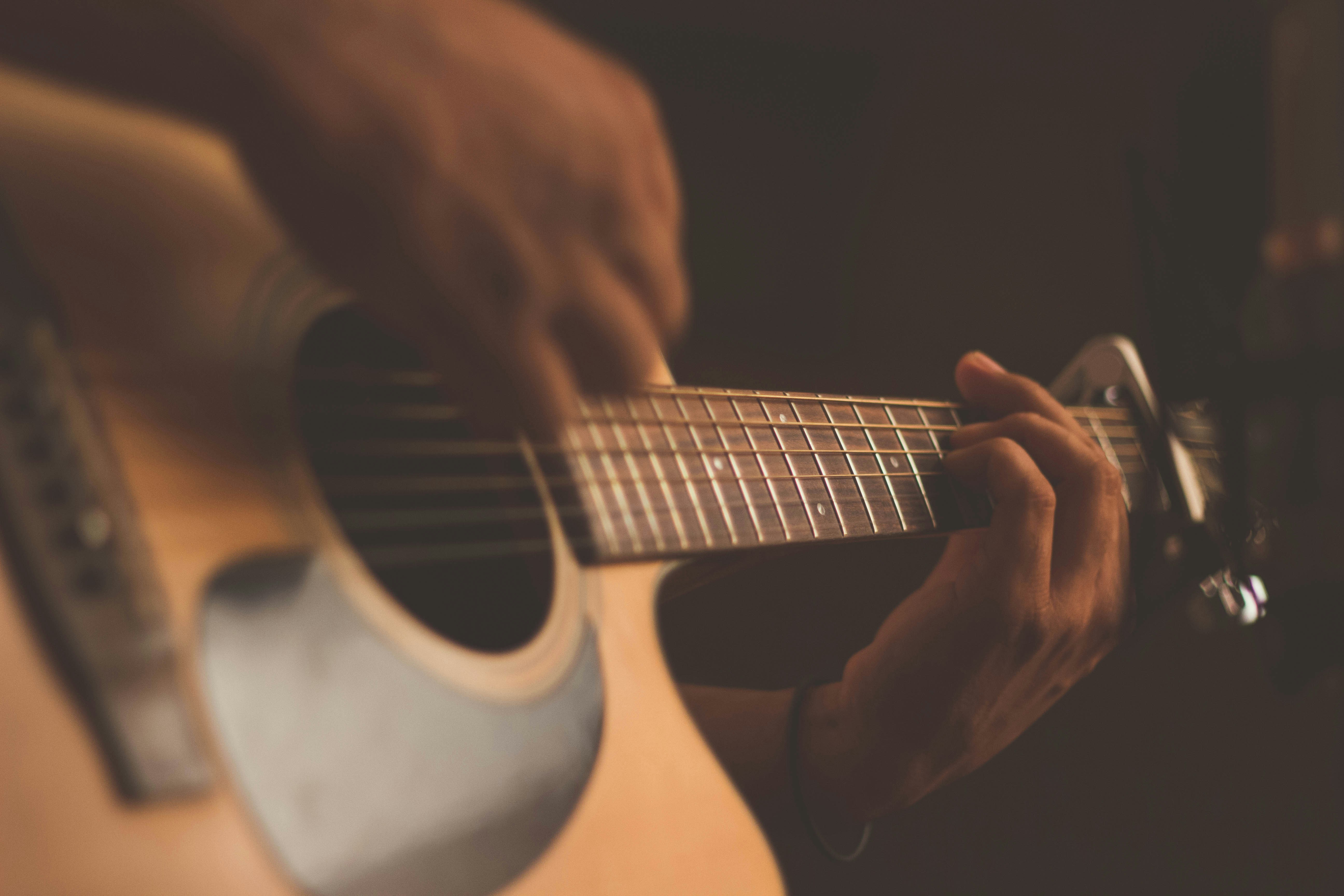
There is a long history of musical censorship, which is evidence of a belief in the power of music to influence. At times, the simple act of making music in a particular style is an act of protest. When jazz became popular in the 1920s, campaigns sprung up to censor “the devil’s music.” By the end of the 1920s, over sixty communities across the US had prohibited jazz in public dance halls.
In addition to fostering coordination and bonding, music also lends itself to conveying ideas. At an intellectual level, art helps us reorder the mind and rationalize the sensory chaos we move through; it creates spaces of patterns and order. Protest songs make sense of our feelings of injustice and suggest a shared moral universe. They make sense when the status quo makes no sense, highlighting the injustice you sense, and showing you that others see it too. As music can be used to create disorder through protest, it can simultaneously create order in one’s mind. Plato claimed music is “a heaven-sent ally in reducing to order and harmony any disharmony in the revolutions with us” (3). This is not a re-ordering to align with the thoughts of someone else, but a clearing away to allow space for thoughts without distraction.
Beyond the intellectual level, songs engage us on an emotional level in a way few other art forms can. Lamenting the neglection of poetry, Matt Kelly, drummer with the Dropkick Murphys, says, “Music is probably today’s only popular medium to convey deep emotion.” According to musicologist Michael Spitzer, “more than literature, more than painting, music is a watery medium in which we swim” (4). It is an art form that you can feel submerged in. This submersion is more complete when music is listened to with others experiencing a similar emotion. Literature and art are often more individual experiences, and more static experiences. Music expresses emotion and creates motion.
Music has a history of being memetic of nature and later of work routines. Early music may have mimicked that of the left-right beat of our walk. But we mimic it back. As individuals we hear before we see. In the womb, it is the heartbeat of another that provides the first sensual stimuli; the first music of connection. Beats that naturally invite clapping are typically around 100 beats per minute (bpm). Many songs have tempos within the 60-120 bpm range, aligning with the typical walking pace and average heart rate (5).
We can inhabit music; we feel it on our skin and in our core, and we can use it to express our innermost emotions. This feedback loop of emotion and motion can be a great source of energy. When faced with difficult odds, as many protest movements are when trying to change the status quo, a rational belief in your ability to effect change can only take you so far. The emotional engagement allows you to believe in the power to change what your rational brain tells you is not possible to change. Dustan Bruce, former lead singer of Chumbawamba, told me that hearing “People Have the Power” at a Patti Smith concert – a song whose goal was to recapture some of the energy Smith felt when protesting the Vietnam War – gave him the emotional energy to believe that change was possible again, even when, on a rational level, he remained cynical this is the case.
Singing and dancing together can strengthen your resolve, provide energy, but also provide a sense of empowerment. Action is consolatory. Psychoanalyst Donald Winnicott advised the mother of a child constantly distressed by sudden or loud noises to give the child a spoon and tin tray and to make a loud noise back whenever he was distressed (1).
Some of the energy protest songs provide comes from anger. Psychiatrist Anthony Storr notes the physiological responses music can elicit are like those experienced in heightened states of arousal caused by powerful emotions like sexual excitement, but also rage (1). Social media algorithms and sales of tabloid newspapers demonstrate we like to feel angry. Whilst short periods of stimulation deprivation can lead to tranquility, longer periods result in desperate efforts to relieve the monotony. We enjoy the physiological responses that occur when our anger is stimulated. Protest songs can tap into this, we sometimes listen to them to make us angry, as we enjoy the sensation. It is when we are teenagers forming our identities through rebellion and anger against those in authority that many of us become most deeply influenced by music. When we share that emotional arousal with others it creates community, not just in a sense of rational agreement with the music’s message, but an emotional alignment.
Music can emotionally connect us to those on stage, the subjects of the song, and even to our younger selves, the memory of which the music triggers. We briefly become them and take up their emotions and motions. The empathetic connection can be effective in not only convincing listeners of the message of a song but in enabling listeners to, however superficially, place themselves in the position of the subject of the injustice the song highlights.
Despite the overwhelming evidence of the role that culture plays in shaping aesthetic responses to music, the powerful emotional connections music can arouse have led many to believe that music possesses transcendental qualities. These qualities allow the musician or listener to connect with something beyond our everyday feelings and reality (the ease and force of musical communication can make it hard to imagine that one’s response to music is not universally shared) (5).
In a letter by Romain Rolland to Sigmund Freud, Rolland described an oceanic feeling as one of unity experienced with God or the universe. It is a “sensation of ‘eternity’, a feeling of something limitless, something ‘oceanic’” (6). Freud described it as “belonging inseparably to the external world as a whole” (6). Of all the arts, music is the one that is most often linked to inducing a connection with something immaterial.
Philosopher Arthur Schopenhauer believed music provided a connection to his will-to-life, the life-force he believed was contained within all living creatures. Schopenhauer thought “other artforms only speak of shadows,” but music “speaks of the thing itself” (7). It allows us to perceive the essence of emotional life (sadness itself or joy itself), and through aesthetic contemplation of music one can temporarily pause the ceaseless striving of the will – the root of human suffering – and achieve a fleeting tranquil state of consciousness.
It is likely that music and religion arrived at the same time in our evolution. The connection between an emotional response to music and a religious feeling is strong. As well as adding a sonic pageantry to religious ritual, music, when taken to extremes, can create a sensory overload that creates a trance-like state, in which you are more likely to be receptive to whatever message is communicated. When a protest song taps into these intense feelings, it can imbue its message with a moral or spiritual force that can be resistant to challenge by reason. Cunnigham told me that The Levellers, wary of the power of music to influence, want the message of their protest songs to ultimately be, “think for yourself.” This is echoed by Kelly, who has no problem with a listener engaging with the band’s views “as long as he doesn’t substitute or suppress his own thought-out opinions.”
A great performance of music, the perfect song for the situation or the intense feeling of bouncing up and down in sync with others, can uplift us, removing us from our daily worries and ennui. It can feel like a submersion, a feeling of surrendering ourselves to something greater than our individual selves, connecting us not just with one another, but with deep universals of human experience common to us all, without being fully transcendent.
Musician and composer Christopher Benstead told me of experiencing this feeling – of being connected to something greater than yourself – when listening to the original Live Aid, the multi-venue fundraising concert to mitigate the famine in Ethiopia. Music acted as a medium to connect people to each other and across continents but also to a cause and a common humanity. These feelings can have many commonalities with Rolland’s oceanic experience, even if your beliefs are secular. We revisit our favourite songs more regularly than the equivalent novels or films; some retain their impact infinitely.
Speaking with Bruce on whether the Iraq War protests that he attended – in addition to re-releasing “Jacob’s Ladder (Not in My Name)” – made a difference, he expressed frustration that they didn’t. I shared with him that, having served in Iraq, I believe our tactics and our eventual withdrawal were driven by political concerns over lack of public support to the war influenced by the protests his music was part of, highlighting the ambiguous causal chains of artistic influence.
Ludwig van Beethoven’s “Ode to Joy”, a song promoting universal brotherhood at a time of conflict, provides an example of such a chain. It began as an ode written by poet Friedrich Schiller in 1785, when revolution was fermenting across war-torn Europe. It was a manifesto for the Enlightenment ethos of freedom and justice. Schiller hoped the French Revolution would herald a new age. But by the early 1790s, his hopes were shattered by the Reign of Terror, when revolutionary fervor metamorphosed into the tyranny of massacres and executions. When Schiller died in 1805, he considered his “Ode to Joy” a failure. In 1822, thirty-seven years after encountering Schiller’s poem, Beethoven started writing his ninth symphony. No composer had written poetry into a symphony before.
In another protest song about war, conscientious objector Benjamin Britten repeated this approach 138 years later when commissioned to write a piece for the consecration of the new Coventry Cathedral. The original cathedral had been destroyed in a Second World War bombing raid, Britten interspersed the poems of Wilfred Owen into his “War Requiem”.
“Ode to Joy” became the crowning choral finale of Beethoven’s symphony, as the deaf composer conducted its first performance back in 1824. It was received rapturously by the Viennese crowd. As it reached its finale, Beethoven’s signature melody repeatedly rises out of the somber and serious symphony before being submerged. Refusing to be repressed, it bursts joyously forth once more.
Many years later, Chilean protesters sang the melody as they protested General Pinochet’s dictatorship. Chinese students played it during the Tiananmen Square protests. And Leonard Bernstein conducted it in a concert celebrating the fall of the Berlin Wall. The melody was also adopted as the anthem of a peaceful Europe, 167 years after Schiller’s death.
Anthropologist Ernest Becker believed that the basic motivation for human behavior is fear of death. Becker suggested that a significant function of culture is to provide ways to engage in death denial (8). Music may have been the first medium through which we tried to express ourselves and build culture. If we agree with Becker, we can see that all music is a form of protest against our fate; an attempt at momentary connection that creates belonging and an attempt to bring order and even meaning to our shared chaotic, temporary experience. The songs we sing can create a sense that we’re part of something greater than ourselves, which will continue after us. They have recorded our history, passing down proof that we were here. Through them, we have left a record of our individual and collective joys, sadnesses and hopes. It’s no coincidence that religion and music likely arrived at the same time in our evolutionary history as they were answering a similar need and worked together to do so.
When I met Bruce, he had recently been asked to sing Chumbawamba’s “Tubthumping” at the funeral of a friend’s father. As he sang the lines “I get knocked down, but I get up again” at the graveside they took on a deeper resonance. To paraphrase T.S. Eliot, we are the music while music lasts (9). We all realize that one day we will not get up again, to sing otherwise is an act of defiance.
When individual injustices feel overpowering, maybe we should take up a spoon and tin tray and start banging them together. There will always be injustice to protest, including the injustice of our mortal condition. Today, musicians are composing songs to protest the conflict in the Middle East. Like Winnicott’s child, we may not change anything, but we might feel better – and who knows where the ambiguous chains of causality may take the music you make or the music you allow yourself to be submerged in.
Andy Owen
References:
- Sorr, A., “Music and the Mind”, 1997.
- Plato, “The Republic”, 375 BC.
- Plato, “Timaeus”, 360 BC.
- Spitzer, M., “The Musical Human: A History of Life on Earth”, 2022.
- Margulis, E. H., “The Psychology of Music”, 2019.
- Freud, S., “Civilization and Its Discontents”, 1930.
- Schopenhauer, A., “The World as Will and Representation”, 1818.
- Becker, E., “Denial of Death”, 1973.
- Eliot, T. S., “The Dry Savages; The Four Quartets”, 1941
Leave a Reply