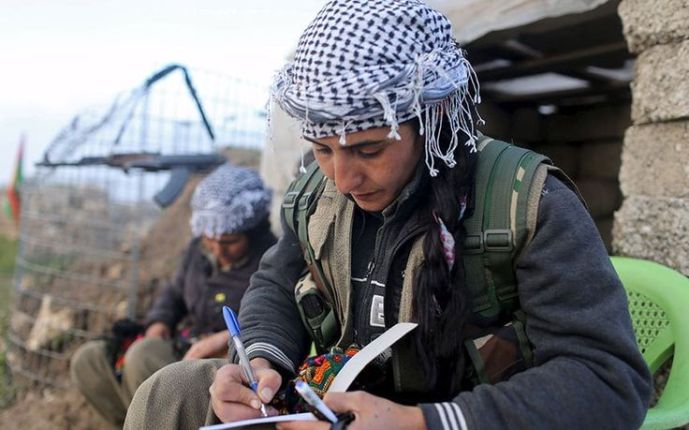
This article is written out of concern over the decision of the Kurdistan workers’ party (PKK) to disarm—a move that, while framed as a step toward peace, echoes the tragic setback of Mulla Mustafa Barzani in 1974-5. History has shown that when Kurdish groups lay down their arms without firm guarantees, they face betrayal and defeat. This decision, made in the absence of binding assurances, is deeply troubling. The Kurdish experience is marked by repeat losses when disarmament occurs without legal, political, and international protections. My aim is to highlight that hope alone cannot rewrite history; without concrete guarantees, disarmament can be devastating.
The Ottoman Empire, ruling for centuries since its establishment in 1299, like other 20th century empires, fell after seven centuries – 1922. As a result, the map of the Middle East started to change, especially with the increased presence of European and Western interests in the region. With the decline of the Turkish Empire and directly after its downfall, Mustafa Kemal Ataturk, empowered by the Turkish national movement, seized the opportunity to withstand further deterioration of the Turkish power and its total submission to the European powers by establishing the modern state of Turkey in 1923. Thus, the modern state of Turkey was founded and resolved to end the conflicts between Turkey and the Allied Powers (Britain, France, Russia, Italy, Greece, etc.) that had already succeeded in defeating the Ottoman Empire. That is why the Middle East before WWI bears little resemblance to the states that appeared after the conflict— borders were redrawn and political realities were changed redrawn. This can be considered a critical cause in the region, leading to the foundation of the various Kurdish movements, the PKK in Turkey particularly.
Additionally, with the foundation of the Republic of Turkey in 1923, the Kurds in the north of the country (Turkey) have endured systematic repression, exclusion, and severe marginalization. After many decades and within unbearable conditions, a group of young Kurdish and Turkish students in Ankara University, founded the PKK as a response to fight for the rights of the Kurds in Turkey and for a Kurdish state. The organization was established and led by its jailed leader, Abdullah Öcalan. Öcalan was both the organization’s practical and theoretical leader, benefitting from other leftist philosophers, mainly Murray Bookchin’s theory of communalism. From Bookchin’s work, Öcalan proposed Democratic Confederalism, which eventually paved the way for the PKK, to break from the fetters of strict nationalism.
Before World War I, parts of Kurdistan were already under Ottoman and Iranian control. The Sykes-Picot Agreement (1916), a secret agreement between Britain and France with the assent of Russia, aiming to divide the Ottoman Empire’s Arab provinces, did not mention Kurdistan but laid the groundwork for its fragmentation. The Treaty of Sèvres (1920) briefly offered hope by promising Kurdish autonomy, but it was never implemented. Instead, following the Turkish War of Independence, Mustafa Kemal founded the Republic of Turkey in 1923, where the new constitution made no mention of minority rights, especially for the Kurds. That same year, the Treaty of Lausanne (1923) replaced Sèvres, recognized the new Turkish borders, and officially denied Kurds autonomy..
As a result, the Kurds lost their historical opportunity for statehood. Their modern oppression became deeply rooted in the very interests of the Middle East’s post-imperial nation-states, upheld by Western imperial ambitions in the region. A century later, the Middle East appears to be undergoing another wave of transformation, with shifting borders and renewed obstacles to Kurdish independence—now further complicated by changing regional dynamics and Israel’s evolving interests and involvement, which influence power balances and alliances.
Now, after 40 years of militant struggle, with tremendous values and costs in their resistance, the prospect of the PKK disarming stirs both cautious hope and deep anxiety among the Kurds and many more across the globe. For many, especially in Iraqi Kurdistan, it recalls the traumatic memory of 1974, when Mullah Mustafa Barzani agreed to disarm his guerrilla forces after receiving false assurances from Iran and the United States (2023). The promised support evaporated when it was politically convenient for these powers, leaving the Kurds exposed and defeated. This catastrophic betrayal has remained a haunting symbol of how disarmament without guarantees does not lead to peace, but to destruction and disappointment.
Today, discussions of the PKK disarmament are filled with similar tension. While some see it as a step toward democratizing Kurdish political life—especially in Turkey—others fear it may once again leave the Kurdish people vulnerable to state repression and international neglect. On the one hand, the initiative by PKK’s imprisoned leader, since February 15, 1999 in an operation by the Turkish intelligence (MIT), with alleged support from CIA and Mossad, has even been praised by Badiou and Slavoj Žižek.
On the other hand, Turkey welcomes this decision and asks for much more without promising anything in return. For instance, the Turkish Foreign Minister Hakan Fidan described the decision as “historic”, also stating that the government will keep an eye on other steps of the process to be taken by the group, which sounds very demanding. Embracing the initiation with passive-aggressive responses like ‘terror-free Turkey’, in the president’s speech, Recep Erdogan, is alarming, particularly when he threatened “renewed military operations if the promises aren’t kept.” So far, no rights or initiatives have been assured for the Kurds by the Turkish government, the PKK in particular, leading to insecurities among Kurds. It is also saddening that the same Kurdish leader who has been imprisoned for 25 years by Turkey, and proposes such an initiative for peace and the end of violence, is labeled a ‘ringleader of the PKK terror group’ by the Turkish media, triggering more tensions and violence that could put an end to any peace negotiations.
Moreover, PKK remains a designated terrorist organization by Turkey, the United States, and the European Union. This categorization has long been used by the Turkish state to criminalize not only the armed wing of the PKK but also a wide range of Kurdish political, journalistic, and cultural activities, leading to the imprisonment of hundreds of Kurdish politicians and civilians in Turkey. An optimistic argument for the PKK to lay down its arms, at least at face value, is that it might remove a major obstacle before the Kurdish political participation and allow activists, particularly in Turkey, to engage more freely in democratic processes without being accused of terrorism. In theory, this, as a result, could open the door to greater civil rights, autonomy, and international legitimacy. If it does not happen—like in the case of Iraqi Kurdistan—other forces might rise from the ashes of disappointment.
Nevertheless, disarmament does not happen in a vacuum. The PKK leader, Öcalan, is said to have reached the sobering conclusion that Turkey will continue to kill, detain, and marginalize Kurdish fighters and civilians for decades to come—regardless of whether the PKK continues armed resistance or not. This realization has driven segments of the PKK leadership to consider the futility of endless armed struggle. Yet this does not mean the disarmament option is free of peril. Without political guarantees, legal protections, and genuine negotiations, any decision to lay down arms will most likely lead to another historical tragedy for the Kurds.
Also, historical precedents show how disarmament without structural protection often leads to violence and betrayal. For example, the Tamil Tigers in Sri Lanka entered peace talks and ceasefires, only to be crushed by the state in a final military offensive. In Colombia, the M-19 group disarmed in the 1990s under promises of integration, but dozens of former members were later assassinated. These examples highlight a dangerous truth: when armed groups disarm without legally binding and internationally monitored guarantees, they often become easy targets for repression or elimination. Therefore, the PKK’s disarmament and disbandment, absent of any credible political guarantees from the Turkish state, is not a practical mutual call for peace but seems to be a strategy of indirect forced submission. Turkey has offered no meaningful reforms—no constitutional recognition, no decentralization, no guarantees of Kurdish political participation—only continued repression.

In contrast, Colombia’s peace process (2016), as an example, with the Revolutionary Armed Forces of Colombia (FARC) included international mediation, legal reintegration mechanisms, and institutional reforms, however imperfect. Even with such guarantees, the Colombian process remains fragile, marred by state failures to fully implement promises, and by ongoing violence against demobilized fighters. If a relatively structured and internationally supported process like Colombia’s is still marked by instability, what hope exists for a Kurdish disarmament in Turkey, where no infrastructure for peace exists, and every past gesture by the PKK—such as during the 2013–2015 ceasefire—was met with betrayal and renewed militarism? Disarmament without reciprocal state concessions, international oversight, or structural change is not peace—it is liquidation. One can, therefore, conclude that a just process cannot begin by silencing one party while the other continues to wage war and undermine any future hopes for Kurdish political participation—labeling any political activity as affiliation with the former PKK as it has been interpreting nearly all Kurdish political engagement as linked to the PKK, which cannot even survive in the remote mountains of Iraqi Kurdistan due to the Turkish drone strikes.
Another failed promise for a peace process that collapsed and showed the deeper intent of the Turkish state was when Erdogan’s ruling party, after it won the elections, calculated that it no longer needed Kurdish support, despite its promises. This pattern of promising peace and reverting to military and nationalist measures after securing electoral victories recurred in 2009, 2013-2015, and the post-2016 coup attempt. The result, in contrast, was renewed military operations, the destruction of Kurdish-majority towns like Cizre and Sur, and the mass arrest of members of the pro-Kurdish Peoples’ Democratic Party (HDP) after it gained significant number of seats (2015-2016). These actions once more confirm Kurdish fears: disarmament without safeguards is not peace, and is even interpreted as surrender.
This dynamic is further complicated by the regional context. The Kurdish-led autonomous administration in northern Syria (also known as Rojava in Kurdish) has often been targeted by Turkey under the pretext of being affiliated with the PKK. Even though these Kurdish and multi-ethnic forces—especially the People’s Protection Units (YPG) and Women’s Protection Units (YPJ) – Kurdish forces, and later the Syrian Democratic Forces (SDF) – multi-ethnic—were instrumental in defeating the Islamic State in Iraq and Syria (ISIS), also receiving support from the United States, Turkey has repeatedly attacked and sometimes taken over some Syrian Kurdish regions, displacing civilians and destroying infrastructure.
These actions occurred with minimal regional and international consequences, reinforcing the belief that the global community is not prepared to protect the Kurds—even those who fought on the frontlines against ISIS as a common enemy. An example is the American troops’ abrupt withdrawal from Syria in 2019, effectively greenlighting a Turkish military incursion against Kurdish-led Syrian Democratic Forces (SDF). Despite all these challenges, some still argue that disarmament might strengthen Kurdish political influence. But for that to happen, Kurds need guarantees—not just from local states, but also from international institutions, states, and global superpowers. The so-called peace process cannot succeed unless bodies such as the United Nations, the European Union, U.S., etc., and regional human rights organizations play active roles in ensuring that Kurdish civil and political rights are protected after disarmament. Until now, neither Turkey nor any of these bodies have shown real engagement.
In conclusion, any meaningful peace process must acknowledge the deep historical, political, and emotional impact of disarmament on the Kurds and other marginalized groups in Turkey. Peace must not come at the expense of these communities. Concrete guarantees are essential—such as legal protections for Kurdish political movements, cultural organizations, and activists—alongside international monitoring and clearly established accountability measures. Kurdish populations across Turkey, Syria, Iraq, and Iran require tangible support beyond symbolic gestures or political silence. Without such commitments from both Turkey and the international community, disarmament will be perceived not as a path to peace, but as yet another chapter in the ongoing marginalization and letdown of a stateless people, further eroding trust in future peace efforts.
Karzan Mahmood
Leave a Reply