My narrative arises from personal experiences, depicting the sense of insecurity under Turkish drones. I illustrate numerous instances where the Turkish government’s actions instilled panic and caused civilian casualties in Iraq and Syrian Kurdistan, often rationalized as their fight against terrorism. This pattern reveals Turkey’s agenda to eliminate the Kurdish population, a part of a long history marked by blatant crimes against the Kurds. I request that everyone vociferously oppose Turkey’s aggressive actions. The strength of the Kurds is crucial; if they are destroyed, extremist groups such as ISIS gain power, endangering global safety. To safeguard the world, you must ensure the safety of the Kurds.Continue reading “Turkey Links Terrorism to Kurdish Ethnic Cleansing”→
In the aftermath of India’s 2023 Supreme Court ruling against same-sex marriage, LGBTQ+ activists face unique challenges. With limited legal options and a potential NDA win in 2024, this article proposes two strategic approaches for activists to consider. First, engaging with opposition parties can enhance LGBTQ+ representation. Second, collaborating with non-state actors, such as leaders in the media, education, faith, and healthcare institutions, offers the potential for greater societal acceptance.Continue reading “What activists need to do to secure LGBTQ+ rights in India”→
Osama bin Laden’s 2002 “Letter to America” went viral in 2023 amidst heightened public interest in the Israel-Hamas conflict. The letter, since removed from some platforms, critiqued U.S. foreign policy in the Middle East and addressed the Israeli-Palestinian issue by questioning Israel’s historical claims to the region. Exploring bin Laden’s worldview and the sudden surge in the letter’s popularity raises crucial questions about public engagement with complex geopolitical issues in West Asia and the limits of online content moderation.Continue reading “Insights on the Israel-Hamas War from Osama bin Laden’s controversial “Letter to America””→
India and China have separately frustrated and angered many in the West by refusing to condemn Russia’s military action on February 24. The two BRICS member countries’ neutrality is driven by their respective and conflicting national interests. It is a gross error to assume that the two mutually ‘hostile’ Asian neighbors will be further encouraged by the war in Ukraine to reboot their bilateral relationship and move toward forging a tripartite Russia-China-India front to challenge US hegemony.Continue reading “The geopolitics of war in Ukraine is driving India and China further away”→
What are the prospects for peace in Ukraine? Can our international institutions – like the United Nations and International Criminal Court (ICC) – do anything to resolve the conflict? With clear human rights violations taking place, how can violators be held accountable? Are sanctions working? Professor of Law at the University of Waikato, New Zealand, Dr Alexander Gillespie and Associate Professor of International Relations at San Francisco State University in the United States, and Culturico’s own international relations editor, Dr Anthony Pahnke, discuss these themes and others on Culturico’s latest podcast. Dr Gillespie brings years of expertise to the subject, having authored nineteen books in law and politics, and being the first New Zealander to be named Rapporteur for the World Heritage Convention, involving international environmental diplomacy under the auspice of UNESCO. Dr Pahnke has authored numerous articles and two books, focusing on development policy, social movements, and trade.
Recorded: 03.07.23; Host: Anthony Pahnke, guest: Alexander Gillespie
For rightwing populists around the world, whether Viktor Orbán in Hungary or Donald Trump, the former President of the United States, building walls to keep out immigrants has become a political trademark and the stuff of successful electoral bids. Relatedly, far-right parties, such as France’s National Rally or the Alternative for Germany, have made unabashedly deriding international organizations such as the European Union and the United Nations central to their positions.
Overall, it seems that the political vision promoted by rightwing forces around the world foregrounds national autonomy, if not isolation.
This makes not only the actions, but the very existence of various transnational rightwing actors particularly perplexing. Steve Bannon’s pre-pandemic efforts to mobilize individual rightwing politicians to subvert the European Parliament pale in comparison to the efforts of other global networks such as Family Watch International (FWI) or the International Organization of the Family (IOF) that have been building power for over a decade. Whether hosting international conferences, or engaging in policy work at the United Nations, the transnational right is showing itself increasingly as an actor with truly global ambitions, and one that is intent on making real changes. Focusing on these networks sheds some light on where the right is heading, and why it remains strong around the world.
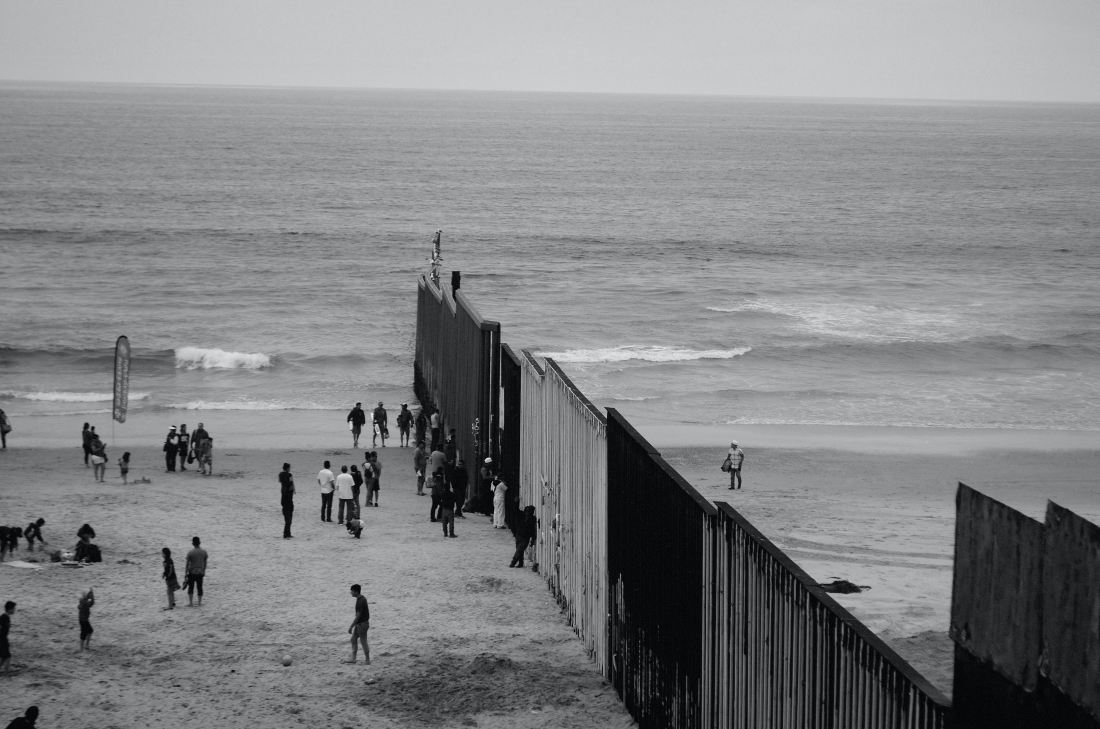
The border between the United States and Mexico. Photo @Max Böhme for Unsplah.
The work of the transnational right has likely escaped the attention of many, especially when bombastic leaders such as Jair Bolsonaro in Brazil regularly snatch the headlines. But equally important – though more in transnational activist spheres – has been the relentless push from more soft-spoken people, such as Allan Carlson.
At first glance, Carlson’s work appears benign, as he was previously a history professor at the small liberal arts college, Hillsdale, in the US state of Michigan. He is still occupied in academia, writing books and serving as editor of the peer-reviewed journal, The Natural Family: An International Journal of Research and Policy.
But driving his work in research and advocacy has been an agenda based on a ruthless, exclusionary discourse that seeks to sideline LGBTQ+ people and champion a fundamentalist vision of Christianity.
Critical to the development of this discourse – and Carlson’s direct activist efforts in propagating it – is Russia. In the mid-1990s, Carlson found ideological common ground with two Russian sociologists – Anatoly Antonov and Victor Medkov – when the US-based academic traveled overseas to meet with these two professors who were also working on issues related to population decline and family policy.
But populations were not simply about numbers, especially for Carlson and his Russian colleagues. For them, their real concern was over particular sets of values and how they are reflected in society. Recognition of the fall in birthrates in this way, offered an opportunity for groups motivated by fundamentalist understanding of Christianity to promote their respective political agendas. In fact, the collapse of the Soviet Union, and with it, the repression of organized religion, made Russia and Eastern Europe in the early 1990s a breeding ground (pun intended) for rightwing Christian, pro-family values groups to recruit and grow.
Shortly after meeting in Russia, Carlson and allies formed the World Congress of Families (WCF). This US-based global coalition of liked minded groups set up its first official conference in Prague in 1997, where it hosted over a dozen different groups and thousands of people from Mexico, Switzerland, the United States, and Canada, among other countries.
At the Prague meeting, the WCF issued ‘A Declaration from the World Congress of Families to the Governments of the Globe,’ which called on national governments and the United Nations to promote policies supportive of the “traditional family.” Since then, the WCF, which has become the event flagship for the IOF, has held yearly global and regional conventions to bring activists and politicians together to forward their vision of the family. Dozens of real organizations from around the world are official partners who actively participate in the WCF.
Still, the strategic work of rightwing transnational networks is not confined to simply issuing statements. For instance, at the most recent WCF annual meeting, held in Mexico City in 2022, Juan Antonio Lopez Baljarg of El InstitutodePolítica Familiar (The Institute for Family Policy, or IPF) explained to conference attendees how promoting the family is central to worries about sustainability. After discussing how sustainability is concerned with the current future use of natural resources, he explained that the same holds true for the family. Reproduction not only of people, but love, solidarity, and the means to transmit culture and values, according to Baljarg require the family and are just as important as water or air. Similarly, one promotional video (that you can find right below here) for the 2019 Conference that was held in Verona, Italy, notes how the universe contains many galaxies, with all kinds of elements. But what provides the “energy” to bring people together to reproduce is love – that is, the love between a man and a woman together in a family.
Perusing the IOF’s website similarly shows a blending of the discourse of sustainability with the family, calling attention both to the United Nations’ reference to the importance of the family in its Sustainable Development Goals, as well as in the Universal Declaration of Human Rights.
Strategically, what we find here is the IOF subtly weaving an exclusionary, extreme discourse into popular parlance, sometimes using sustainability, other times, human rights. Let’s be clear – this is not about any kind of family, but about a heteronormative union between a man and woman. Such dynamics show the mainstreaming of far-right politics.
Family Watch International – another transnational network that partners with the IOF – is making similar strategic moves. For instance, this organization distributes educational videos on everything from challenging Planned Parenthood, the provider of abortion services, to “overcoming” same-sex attraction. FWI, formed at roughly the same time at WCF in 1999, began in the US before expanding overseas. It now has members in over 170 countries.
When not producing educational materials, FWI is influencing policy at the United Nations.
Consultative status with the Economic and Social Council of the United Nations has given FWI the power to influence policy discussions pertaining to gender rights on the world stage. FWI’s work in this regard is most clearly present in the UN Family Rights Caucus. Similar to other international organizations, the Caucus’ primary role is to disseminate information and publish reports. The UN, in effect, provides a platform for FWI to advocate its materials and advocate for its version of the heteronormative family globally.
FWI has also been active, with significant success in Uganda. FWI has made Africa a particular target for its actions, whether that is blaming the AIDS crisis on the lack of monogamous relationships (proof of which is lacking from reports) or offering resources for orphans. FWI’s work has borne fruit, with Uganda’s President earlier this year signing into law “the Anti-Homosexuality Act of 2023”.
Meanwhile, these networks have also engaged domestic leaders to legitimize their activities. For instance, when IOF held its annual conference in Italy, the former Deputy Prime Minster of the time, Matteo Salvini, spoke. In Moldova in 2018, the then President of the country, Igor Dodon, hosted the event. Orbán welcomed the conference with open arms when it was held in Hungary in 2017. The involvement of senior political figures makes the version of the family championed by the transnational right appear normal, if not authoritative.
Whether through its conferences, or its lobbying of the UN, transnational rightwing actors find ways to present their views in common sensical ways. Meanwhile, their impact is felt everywhere – locally, at the state-level, and internationally.
Human rights groups have labelled both the IOF and FWI as hate groups, as these networks do not simply promote one mode of family life, but actively seek to delegitimate those that don’t fit their vision. However, these networks not only remain active, they also appear to be growing.
Brexit may now seem like ancient history, Trump is no longer president of the US, and Bolsonaro not only lost the Presidency, but has been banned from participating in Brazilian politics until 2030. In some ways, it may appear that the right is in retreat. But, as the activities of FWI and IOF make clear, the far right transnationally is alive and well. By blending their discourse with the work of international institutions and the politics of certain domestic regimes, they have found the means to endure over time.
So, while some of the more bombastic right-wing leaders have been sidelined, networks of activists around the globe provide fertile ground for others to grow and spread their message. As the right remains active around the globe, it is up to everyone who embraces democracy to champion pluralism against their campaigns of exclusion and discrimination.
Together with the effects of global warming and geopolitical conflict, the limited water resources and rugged terrain of the Horn of Africa pose grave threats to the region’s peace and prosperity. The disputes over international borders and the continuation of conflict exacerbate the situation. We need a systemic approach that takes into account the intricate interplay of history, politics, and geography to solve these issues.Continue reading “Understanding the horn of Africa through a geographic lens”→
In this piece, I provide a novel proposal for how to think about possible peace talks between Russia and Ukraine, bringing in the case of the Guatemalan peace process that took place in the 1980s and 1990s. I discuss how this case illustrates not only how peace talks take time, but may involve parties besides those that are directly involved in a conflict. In my comparison, I draw parallels between what could happen to bring groups together to end the current conflict in Ukraine, highlighting the potential role of religious leaders, NATO, and third-party states such as Mexico.Continue reading “Peace talks are possible to end Russia’s war with Ukraine – Guatemala shows how”→
The recent Turkish elections resulted in a close split with an incumbent lead and a planned runoff in late May of this year. Religious-secular dynamics in Turkish politics are prescient in the current election. A 20th century backdrop that included a long experiment with secularism in the Middle East and North Africa – with Turkey at its vanguard – offers explanatory value to understanding the current Turkish electoral context.Continue reading “Religion and secularism in Turkey and the Turkish elections”→